

Emotional wellbeing plays an important role in our everyday lives, influencing how we feel, respond to challenges, and manage periods of stress. While lifestyle factors such as sleep, physical activity, and social connections remain essential, scientific interest in the relationship between nutrition and emotional health continues to grow.
Among the botanical ingredients being investigated, saffron (Crocus sativus L.) has attracted particular attention for its potential role in supporting mood and emotional balance.
But what does the scientific evidence actually tell us?
Saffron is best known as a culinary spice, valued for its colour, aroma, and distinctive flavour. However, it also contains naturally occurring bioactive compounds, including crocins, crocetin, and safranal, that have attracted scientific interest.
Research has investigated how these compounds may interact with biological pathways involved in mood regulation and the body's response to stress.
Although the precise mechanisms are not yet fully understood, findings from clinical and experimental studies have encouraged further investigation into saffron's potential contribution to emotional wellbeing.
An important consideration is that not all saffron preparations are identical. Their composition, extraction methods, and standardisation can vary, making research on specific, characterised extracts particularly relevant.
Several randomised, placebo-controlled clinical trials have investigated saffron extracts in relation to mood and emotional wellbeing.
One of the most extensively studied ingredients in this area is Affron®, a standardised saffron extract developed by Pharmactive.
A randomised, double-blind, placebo-controlled study published in Complementary Therapies in Medicine in 2017 investigated Affron® in 128 adults reporting low mood.
Participants received either 22 mg or 28 mg of Affron® daily, or a placebo, over four weeks.
At the 28 mg daily dose, researchers observed a significant improvement in the Profile of Mood States (POMS) Total Mood Disturbance score compared with placebo, suggesting a potential benefit for maintaining a positive mood during periods of occasional stress.
The 22 mg dose did not demonstrate the same treatment effect, highlighting the importance of studying specific doses rather than assuming that all amounts produce equivalent results.
A 2025 study published in The Journal of Nutrition provided additional evidence from a larger population.
In this 12-week, randomised, double-blind, placebo-controlled trial, 202 adults aged 18–70 experiencing low mood were assigned to receive 28 mg of Affron® daily or a placebo.
The primary outcome was measured using the depression subscale of the Depression, Anxiety and Stress Scale (DASS-21).
Results showed that 72.3% of participants in the Affron® group achieved a clinically meaningful improvement on this measure, compared with 54.3% in the placebo group.
The study also found a statistically significant between-group difference in the primary outcome. However, the large placebo response and the absence of significant differences in most secondary outcomes underline the need for careful interpretation.
Together, these findings add to the clinical evidence investigating standardised saffron extracts and emotional wellbeing.
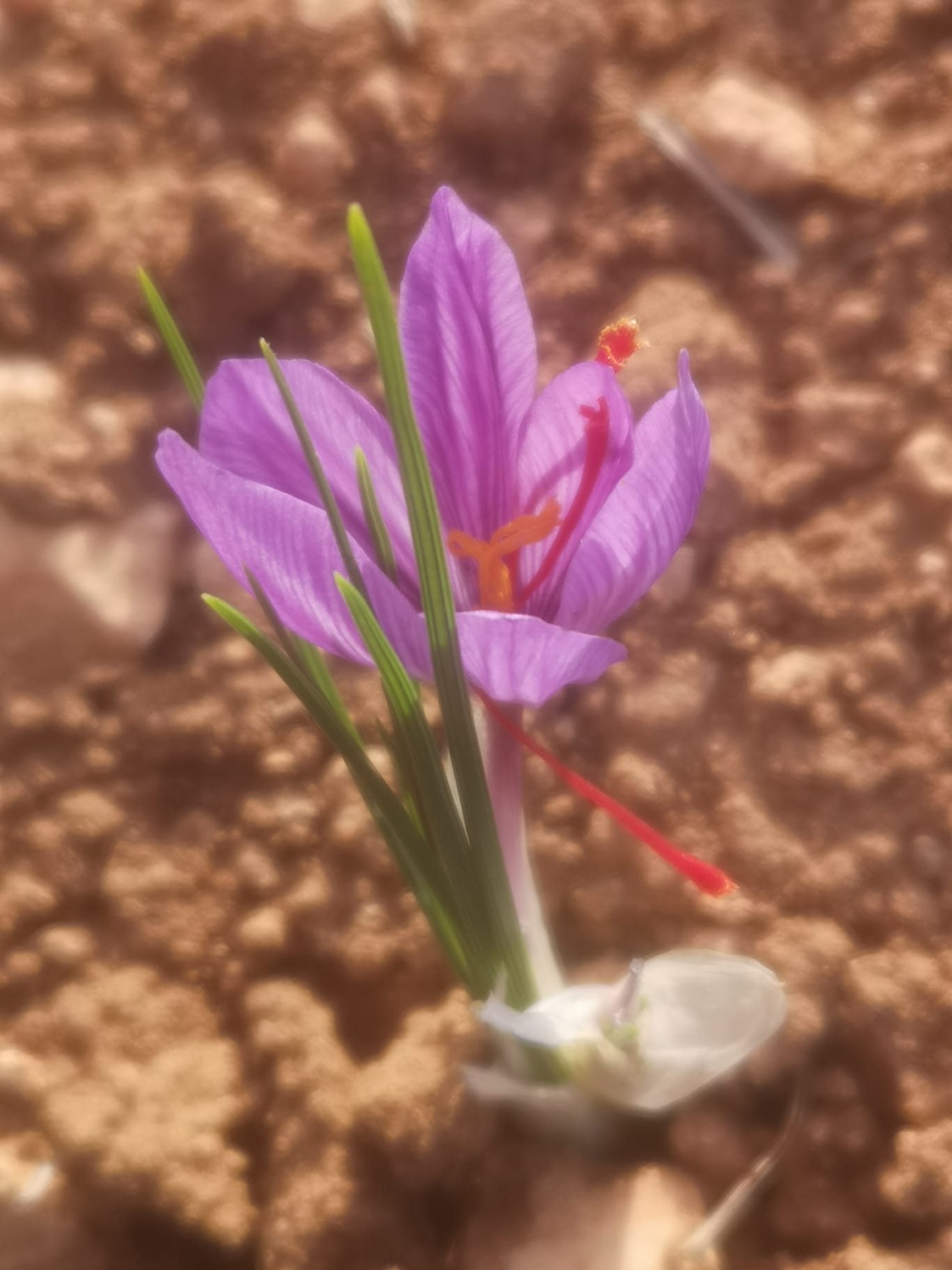
Researchers have proposed several potential biological mechanisms that may help explain saffron's effects on mood.
These include interactions with neurotransmitter-related pathways, antioxidant and inflammatory processes, and physiological systems involved in the stress response.
One area of interest is the hypothalamic–pituitary–adrenal (HPA) axis, which plays a central role in how the body responds to stress.
Experimental research has explored whether saffron's bioactive compounds may influence these pathways. However, much of the mechanistic evidence remains preclinical, and further human research is needed to establish exactly how these processes contribute to the outcomes observed in clinical trials.
Understanding these mechanisms is an evolving area of research rather than a complete explanation of saffron's effects.
When reviewing research on botanical ingredients, it is important to distinguish between a plant in general and the specific extract used in a clinical study.
Different saffron preparations may vary in their concentrations of bioactive compounds and in the processes used to obtain them.
Affron® is a standardised extract characterised by its proprietary Lepticrosalides® complex and analytical fingerprint, designed to support consistent ingredient quality.
This standardisation is particularly relevant when interpreting clinical findings, since results obtained with one formulation should not automatically be attributed to all saffron products.
Clinical research suggests that certain standardised saffron extracts, including Affron®, may have a role in supporting mood and emotional wellbeing.
The available studies provide encouraging findings, particularly in adults experiencing low mood, while also highlighting important limitations, including the need for replication and a better understanding of long-term effects.
As research continues, the combination of well-designed clinical trials, clearly characterised ingredients, and transparent reporting will remain essential to understanding saffron's potential.
For those interested in botanical approaches to emotional wellbeing, saffron represents a promising and actively researched area of nutritional science.
The findings discussed in this article relate to specific saffron extracts and study populations. They should not be interpreted as evidence that saffron supplements can replace professional assessment or treatment for mental health conditions.
Kell G, et al. affron® a novel saffron extract (Crocus sativus L.) improves mood in healthy adults over 4 weeks in a double-blind, parallel, randomized, placebo-controlled clinical trial. Complement Ther Med. 2017;33:58–64. https://doi.org/10.1016/j.ctim.2017.06.001
Lopresti AL, et al. An Examination into the Effects of a Saffron Extract (Affron) on Mood and General Wellbeing in Adults Experiencing Low Mood: A Randomized, Double-Blind, Placebo-Controlled Trial. J Nutr. 2025;155(7):2300–2311. https://doi.org/10.1016/j.tjnut.2025.05.024


